
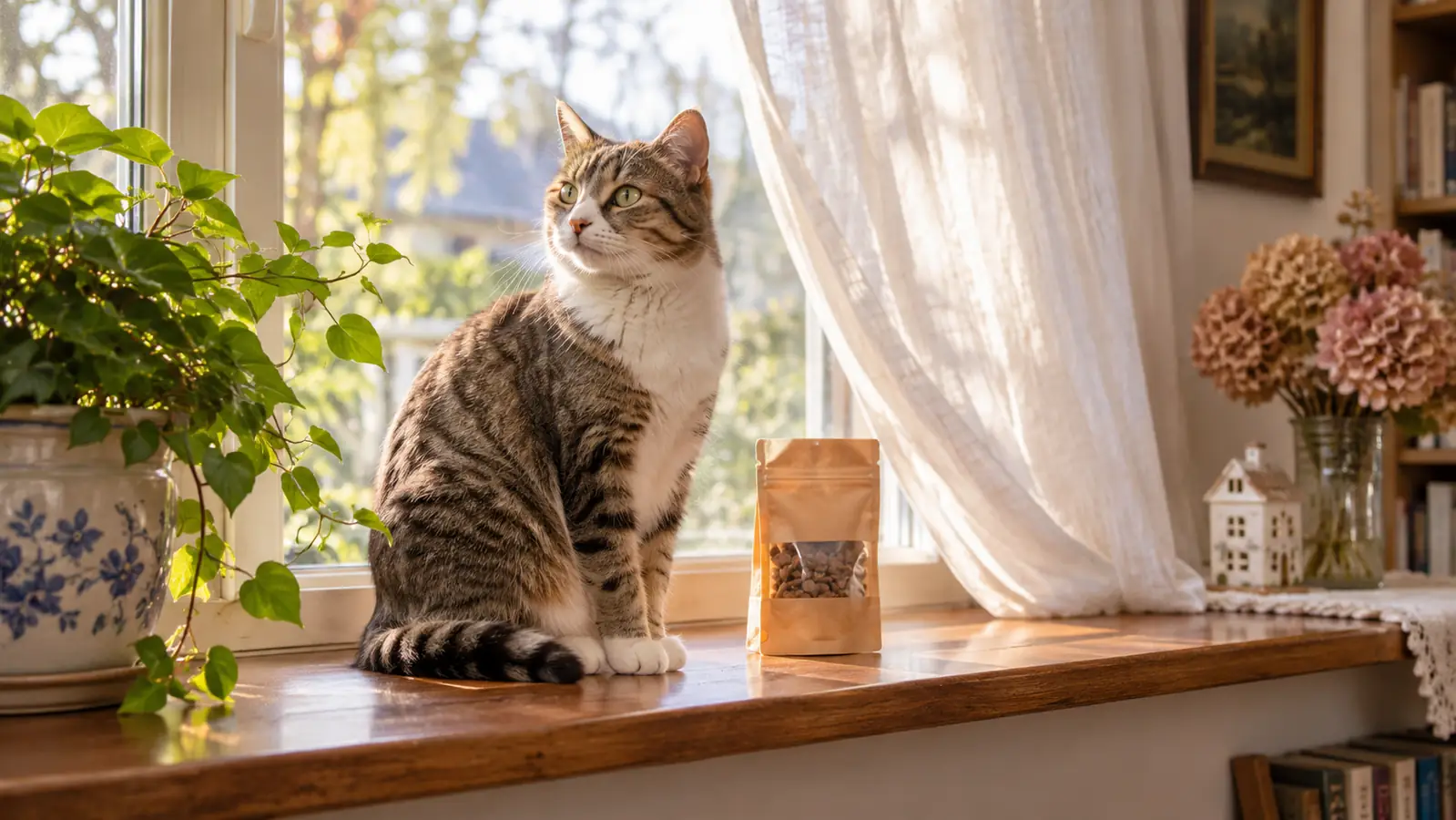
Pepper left a hairball on the good rug at 5:40 on a Tuesday morning, and I stood there in my slippers trying to remember which bag of chews was in the pantry. I bought hairball chews for nine years before I retired, and I spent nineteen years before that behind the front desk of a small animal clinic, so I have handled more of these containers than most people will in a lifetime. The short answer is this: Pet Honesty Cat Hairball Remedy Chews are the ones I keep in the kitchen drawer, and Vet's Best is the one I pick up when I have run out and cannot wait for a delivery.
That is not a knock on Vet's Best. It is a name I have seen on a lot of shelves, and plenty of cats will eat it when they will not eat anything else. But the two products are not doing the same job, and once you know what separates them you can pick in about thirty seconds instead of standing in the aisle reading the back of both. Here is what I found with Pepper, who is nine, eleven pounds, indoor only, and picky enough to refuse a can of food that has been open in the refrigerator since yesterday.
| Pet Honesty | Vet's Best | |
|---|---|---|
| Fiber sources | Psyllium husk, citrus pulp and apple pomace, all named on the bag | A different fiber blend, so read the panel on the container you pick up |
| Format | Crunchy bites | A softer chew, which matters if your cat refuses a crunch |
| Flavor | Chicken | Flavored, and the flavor varies by formula, so check the label |
| Supply | 30-day supply, 3.7 ounces, bag measures 2 by 5 by 7 inches | Sold by chew count, so measure the daily dose against your cat |
| Coat support | Zinc methionine plus omega-3s from fish oil and lecithin | Look at the panel for whatever zinc and omega sources it lists |
| Cat acceptance | 9 out of 10 cats in an independent feeding study, 4.6 stars from 7,701 ratings | No equivalent published feeding study that I could find |
| Where to buy | Online, arrives in a few days | On the shelf at pet and drug stores |
| Best for | Indoor cats with a steady hairball habit and an owner who wants the fiber spelled out | A cat that turns up its nose at crunchy bites |
Where Pet Honesty Wins
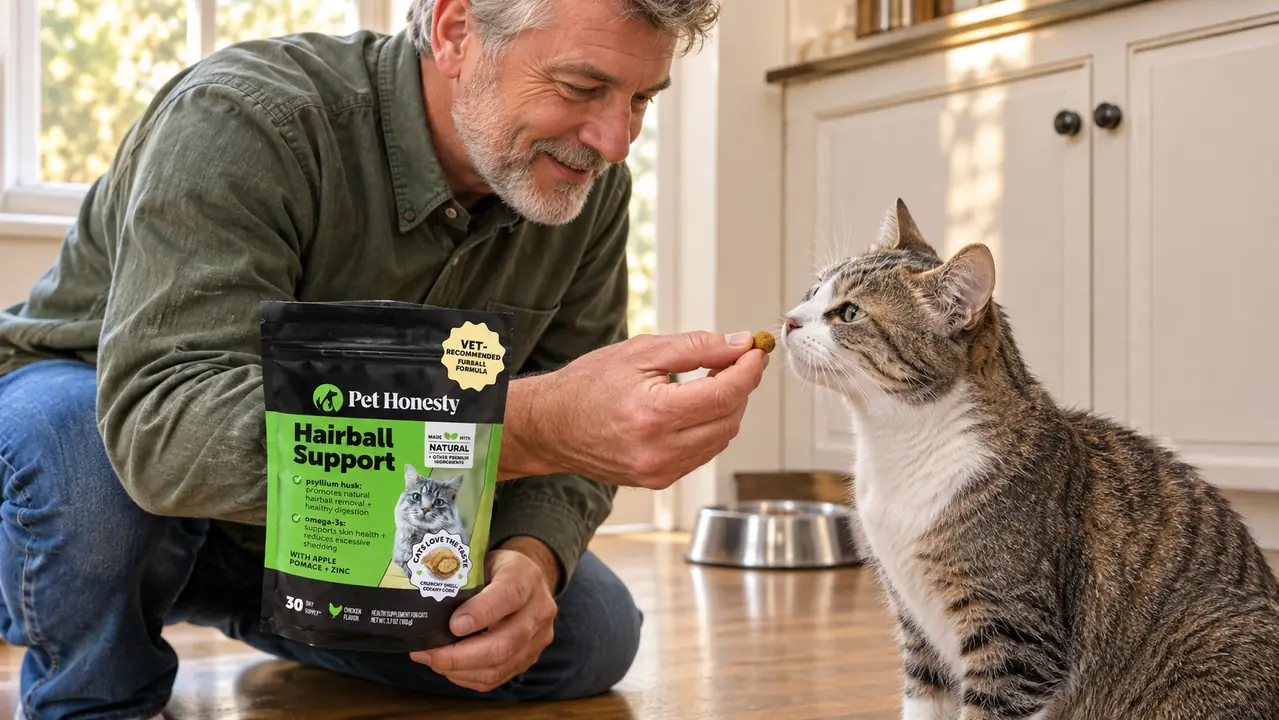
The first thing I do with any hairball product is turn the container over and look for psyllium. Pet Honesty lists psyllium husk among the active ingredients, alongside citrus pulp and apple pomace. That combination does two jobs. Psyllium is a bulking fiber that holds water and keeps things moving through the gut, which is how swallowed hair gets carried out instead of sitting in the stomach until it comes back up on your carpet. Citrus pulp and apple pomace add fiber from fruit, and the mix is gentler than leaning on one heavy fiber source alone.
The second thing I look for is whether the formula addresses the coat, because hairballs start with shedding. Pet Honesty includes zinc methionine and omega-3s from fish oil and lecithin. Zinc methionine is a form of zinc that is easy for a cat to use, and omega-3s support skin and coat. Pepper gets a dull, flaky coat every winter, and that is exactly when she coughs up more hair, so a chew that works on the coat and the gut at the same time makes sense to me. It is also non-GMO, which matters to some people and not at all to others. I mention it because it is on the bag.
I will say this plainly too. The company publishes a feeding study, and 9 out of 10 cats ate the chew in it. That number matters more than any slogan, because a supplement your cat will not eat is a decoration. The listing shows 4.6 stars across 7,701 ratings, which is the kind of sample size that makes a skeptic like me pay attention. Pepper ate these off the floor like they were a treat, and she is not a cat who gives out free passes.
The bag itself is small, 3.7 ounces, about 2 by 5 by 7 inches, and it lists a thirty-day supply. That fits in the drawer next to the cans, which sounds like a small thing until you have owned a cat for nine years and your counter is already crowded with a brush, a water fountain and a jar of treats nobody likes. I could tell you the exact count of chews in the bag, but I counted once and got distracted, so I will only tell you what I actually verified, which is that a thirty-day bag lasted Pepper twenty-six days and I never once had to chase a half-eaten chew across the kitchen.
Where Vet's Best Wins
Here is where I give the other container its due. Vet's Best is the one you can walk into a store and buy today. If your cat is coughing at nine o'clock on a Sunday night and you are out of chews, being able to drive five minutes and put something on the floor beats any ingredient panel ever printed. I have made that drive. It is the reason I still keep a container of it in the hall closet, behind the extra paper towels, where I can find it in the dark.
The other advantage is texture. Vet's Best is the softer chew, and there are cats who will not touch a crunchy bite no matter how it smells. If your cat is one of them, a soft chew is the better place to start, and there is no sense in ordering a thirty-day bag of something that gets batted under the stove on day one. Familiarity counts for something too. A lot of people I know have used Vet's Best for years because their mother used it, or because the woman at the rescue handed them a container with the adoption paperwork. That kind of trust is not nothing, and I am not going to pretend it is.
If your cat already takes a crunchy treat from your hand, start with the bag that names its fiber
Pet Honesty lists psyllium husk, citrus pulp, apple pomace, zinc methionine and omega-3s right on the bag, and Pepper cleaned up a thirty-day supply without one refusal. Read the panel against your own cat's habits before you commit.
Amazon See the ingredient panel on Amazon →What Is Actually in the Bag
I want to be careful here, because this is where a lot of write-ups start making things up. The listing gives me the active ingredients and the stated benefits, and it does not give me a milligram breakdown per chew. I am not going to invent one. What I can tell you is what each named ingredient is doing in a hairball formula, and why the order on the panel matters to me.
Psyllium husk is the workhorse. It is the same fiber that shows up in human supplements, and it absorbs water and adds bulk to stool, which helps hair move through the digestive tract rather than collecting in the stomach. Citrus pulp and apple pomace are fruit fibers. They add bulk too, and they give the gut bacteria something to work on, which is why the bag lists digestive health and immune support among the benefits. Zinc methionine supports skin and coat, and fish oil and lecithin supply omega-3s. None of that is exotic. It is a sensible fiber and coat formula, and every piece of it is named.
What the bag does not tell you is how much of each ingredient sits in a single bite, and honestly, that is true of most chews in this category. What I do instead of chasing numbers is watch the litter box and the rug. If the stool stays normal and the coughing drops off over three or four weeks, the formula is doing its job for your cat. If nothing changes, you have your answer, and you did not need a lab report to get it.
One more thing about the label, and then I will get off this. The bag tells you what the product is for: hairballs, coat, indoor cats, stomach. It does not promise that your cat will never cough up a hairball again, and any product that does promise that is telling you something about its marketing department, not its ingredients. Hairballs are a shedding and grooming problem first. A chew is one part of the answer, not the whole answer.
What Thirty Days With Pepper Looked Like
Pepper started on the bag on a Monday. She got one chew after her evening meal, and I broke the first one in half because I am cautious with anything new and because her stomach has opinions about change. She ate half and then sat by the drawer and complained until I gave her the other half. That was day one, and I figured at least the taste was not going to be the problem.
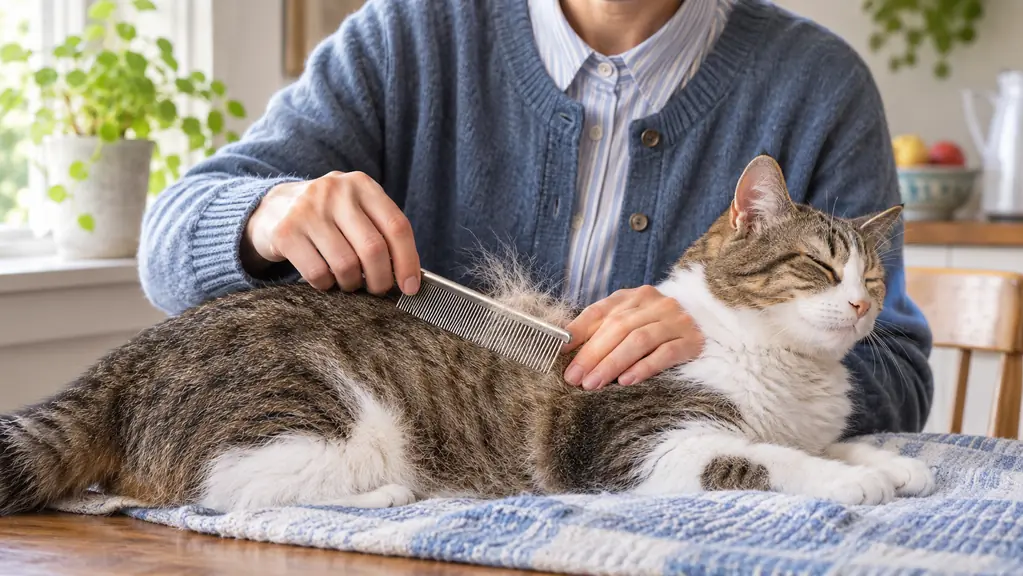
Week one, nothing dramatic. She ate them, and I kept brushing her twice a week the way I always do, because a chew does not replace a brush. Week two, I found one hairball, on the tile in the laundry room, which is the easiest place in this house to find one. Week three, I found nothing. Week four, nothing again, and her coat had a little more shine to it when the light came through the kitchen window in the afternoon.
I will not tell you the chews cured her. Winter was ending, I was brushing her more consistently, and I had switched her food. What I will tell you is that she stayed on the bag for the full thirty days without a refusal, which is more than I can say for three other hairball products I have tried on her, and the rug stayed clean for two weeks straight. Our vet knew I was starting her on it. If your cat takes any medication, call your vet before you add a fiber chew, because fiber changes how other things move through the gut, and that is a conversation for someone who knows your cat's chart.
A supplement your cat will not eat is a decoration. Pepper finished all thirty days without one refusal, and that is the review that matters.
Who Should Buy Which
Buy Pet Honesty if your cat already takes treats from your hand and you want to know exactly what fiber you are giving her. It suits an indoor cat with a steady hairball habit, especially one that goes dull in the coat every winter, because the formula works on the coat and the gut in the same bite. It also suits the person who reads labels and gets irritated when a bag says proprietary blend and nothing else. This one names its ingredients and puts the psyllium where you can see it.
Buy Vet's Best if your cat will not touch a crunchy bite, if you need something tonight rather than Thursday, or if you have used it for years and it already works in your house. There is no prize for switching a cat off a product that is doing the job. What I would not do is buy a thirty-day bag of any chew before your cat has tried one. Ask a neighbor for a single chew, or buy the smallest container you can find, and let your cat vote first.
What I Would Do If I Were You
Whichever container you pick, three habits will do more for hairballs than the container itself. Brush your cat two or three times a week, more in spring when the coat blows out, because the hair you catch with a comb is hair that never goes down the throat. Keep the water bowl full, because fiber needs water to work and a cat on dry food who drinks nothing is a cat who will struggle with any fiber chew on the market. And write the start date on the container with a marker, so in three weeks you can look at the rug and the litter box and tell me honestly whether anything changed.
I have watched a lot of people buy a supplement, use it for four days, and decide it did not work. Hairballs follow the hair cycle, and the hair cycle takes weeks to shift. Give any chew a fair month, watch the litter box, and keep your vet in the loop, especially if your cat is older, on medication, or losing weight. Pepper is nine and healthy and I still called our vet before the first chew. That is not being overcautious. That is being someone who has answered the phone when it went the other way.
Pepper's verdict took thirty days and one clean rug
If your cat already eats crunchy treats and you want the fiber sources spelled out on the bag, Pet Honesty is the one I would put on the floor first. Read the panel, call your vet, and give it a full month before you decide.
Amazon Check availability on Amazon →