
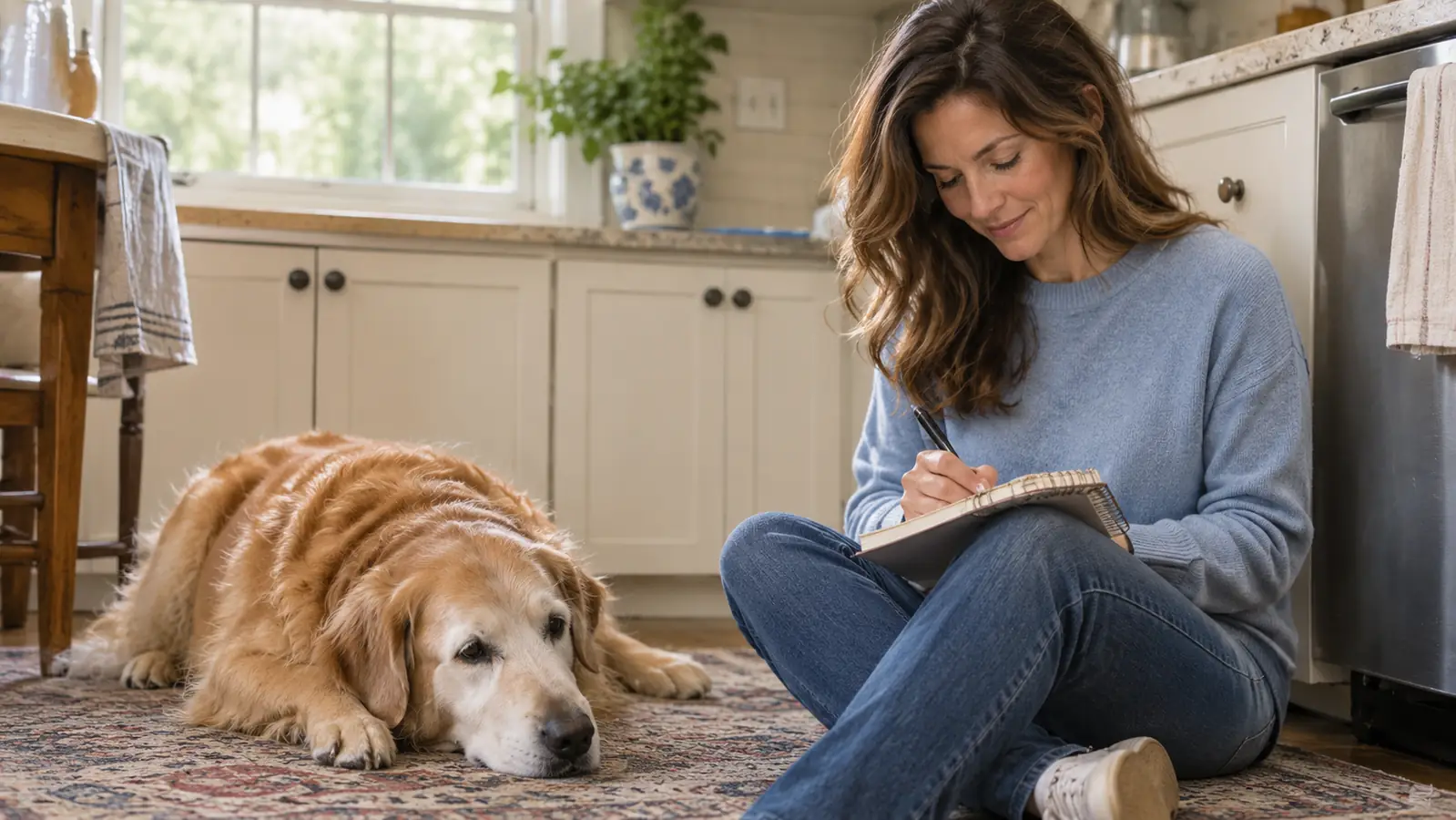
Biscuit is an 11-year-old beagle mix, about 28 pounds, and his gut has one clear trigger: a change in food. I can set down a new bag, mix it in a little too fast, and by the next morning I am following him around the yard with a flashlight. The last time it happened was in October, when I switched him from a chicken kibble to a salmon one because I had talked myself into believing the chicken was the problem. I did the switch in three days instead of ten. By Thursday at 3 a.m. I was standing on wet grass in my pajama pants and a cardigan, holding a flashlight, waiting for him to finish. I spent 19 years behind the front desk of a small-animal clinic, so I know the drill. Call the vet, rule out the scary stuff, then make a boring plan and stick to it. Pro Plan Veterinary Diets FortiFlora is one of the tools I keep in that boring plan, and this is how I use it without pretending a powder can fix a food problem on its own.
Before I go further, hear me on this: a sensitive stomach is a symptom, not a diagnosis. A probiotic is not a substitute for a vet exam, a fecal test, or a proper food transition. If your dog is vomiting, off food, or having bloody diarrhea, stop reading and call your vet. If you have a dog like Biscuit, with soft stool after a food change and no other signs, a probiotic can be a reasonable piece of the plan. I check with our vet every time, and I check a little harder now that Biscuit is a senior dog. Age changes how fast a dog dehydrates and how much a bad week costs him.
The Box I Keep for Biscuit's Loose-Stool Weeks
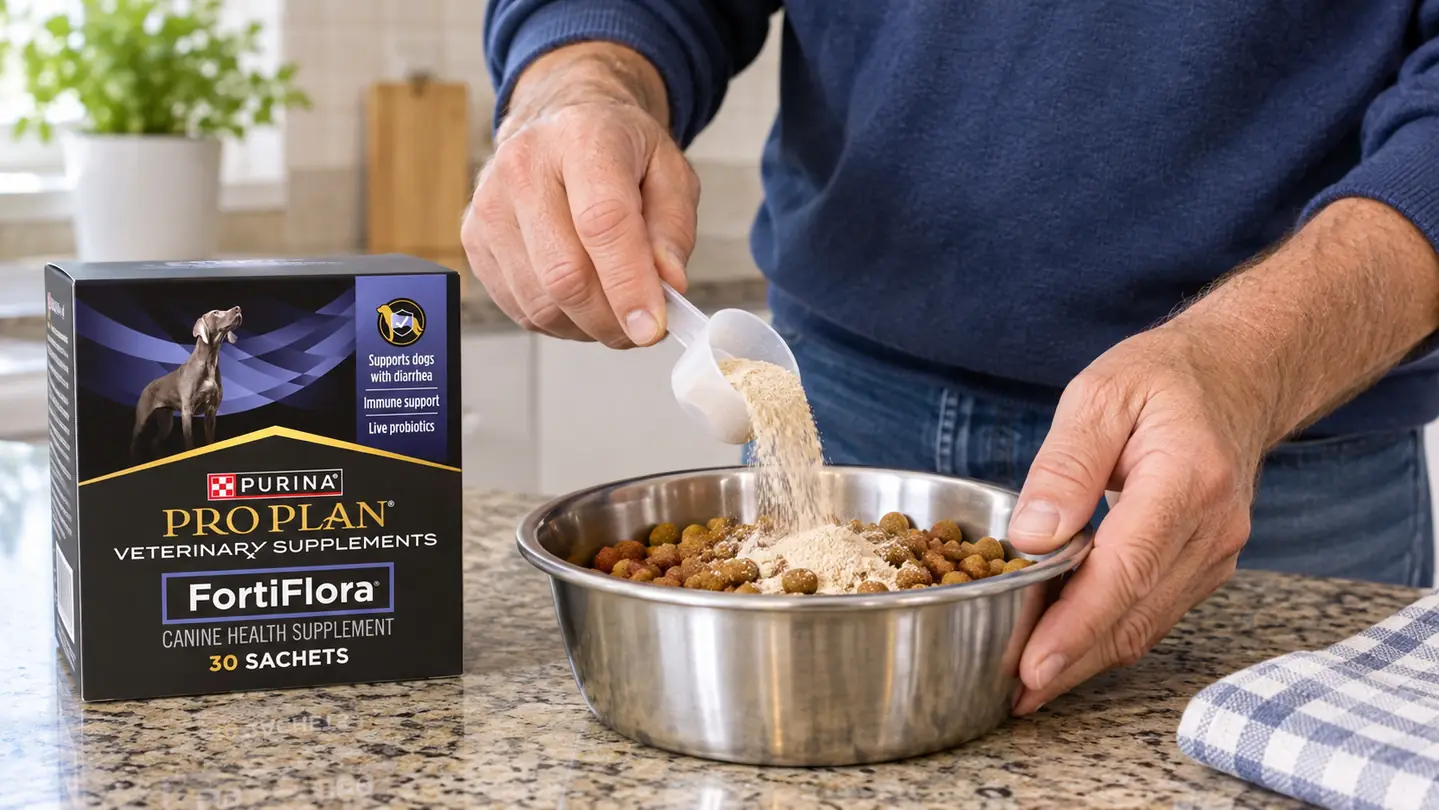
FortiFlora from Pro Plan Veterinary Diets is a powder probiotic for dogs of all ages, labeled for the dietary management of diarrhea. I keep a 30-count box in the pantry so I am not making a panicked run to the store when Biscuit's stool goes soft. It is not a meal replacement and it is not a reason to skip the vet.
Amazon See FortiFlora on Amazon →Step 1: Get the Vet's Read Before You Open the Box
The first call is not to the supplement aisle. It is to your vet. Loose stool in an older dog can be something simple, like a food change, or something that needs a fecal test, bloodwork, or imaging. I have watched too many people buy a probiotic first and book the appointment second, and sometimes that delay costs the dog. Tell the vet what changed, when it changed, how many bowel movements you are seeing, and whether there is vomiting, blood, mucus, weight loss, or a change in appetite. When I called about Biscuit in October, I had four days of notes in front of me and the conversation took about six minutes. The vet asked three questions: is he eating, is he drinking, and is he acting like himself. I could answer all three yes because I had been paying attention instead of panicking.
For Biscuit, our vet gave me a clear rule: if the stool is soft but he is eating, drinking, and acting like himself, I can try a short trial of a probiotic and a bland, simple diet. If he is not improving in 48 hours, or if he gets worse at any point, he comes in. That rule has kept me from guessing. It has also kept me from blaming a supplement when the real issue was a food that did not agree with him. The October visit ended with a fecal test and a short lecture about switching foods too fast, and I have not done a three-day switch since.
Step 2: Match the Powder to the Actual Problem
FortiFlora is not a general wellness dust you put on any dog for any reason. The label says it is for the dietary management of puppies and adult dogs with diarrhea, and it contains Enterococcus Faecium SF68 at 1x10^8 CFU. The inactive ingredients include liver flavor and yeast. It is a powder, unflavored, and it comes in a 30-count box that weighs 1.06 ounces, with package dimensions of 3 by 2.25 by 3.25 inches. The package also says it is the number one vet-recommended probiotic brand, based on an online survey of U.S. veterinarians. I like that the label is specific about what the product is for.
What I do not do is use FortiFlora as a stand-in for a food trial. If Biscuit's stomach is upset because I switched his kibble too fast, the fix is to slow the switch down, not to keep sprinkling powder on a food that is bothering him. I use FortiFlora from Pro Plan Veterinary Diets as support while I clean up the rest of the routine. That distinction matters. A probiotic can help support the gut, but it cannot outrun a bad food match or an untreated infection.
Step 3: Introduce It Slowly and Keep a Boring Log
I am not a fan of changing three things at once. If you start a new probiotic, a new food, and a new treat on the same day, you will never know what helped. I introduce the powder by itself first, mixed into a small portion of Biscuit's normal food, and I do it at the evening meal so I am home to watch him for a few hours afterward. I follow the package directions and our vet's instructions for the amount. I do not guess at a bigger dose because I want it to work faster. More is not better with a probiotic, and a dog with a sensitive gut is not the patient to experiment on. The box is a 30-count, which is more than I usually need for one bad week, so I write the open date on the lid in marker and keep it in the pantry where the cat cannot get to it.
The log is simple, and it lives on the kitchen counter next to the coffee maker so I cannot forget it. I write down the date, what Biscuit ate, when he went out, and what the stool looked like on a scale of 1 to 5, with 1 being firm and 5 being liquid. I also note appetite, gas, vomiting, and whether he seemed uncomfortable. In October my entries read like a weather report: Thursday 3 a.m., a 5 with straining; Thursday 7 p.m., a 4; Friday 6 a.m., a 4; Friday afternoon, a 3. I keep the log for at least five days. That sounds fussy, but it gives the vet real information instead of my memory of a bad morning, and it stops me from declaring victory after one good poop. It also shows me something I would otherwise miss, which is whether the trend is heading the right way even on a day that felt bad.

Step 4: Hold the Rest of the Routine Still
The most useful thing I do for Biscuit's gut is boring: I keep everything else the same. Same food, same feeding times, same treats, same water bowl. I stop the extra chews and the table scraps. I do not let him clean out the cat's bowl, which is a hobby he enjoys and I do not. If I need to change his food, I do it over seven to ten days, and I use a measuring cup instead of eyeballing it: three quarters of the old food and a quarter of the new for three days, then half and half for three days, then three quarters new, then all new. I wrote that schedule on an index card and taped it inside the pantry door, because I am the one who gets impatient, not the dog.
I also watch how he eats. Biscuit is a beagle mix, so he eats like the bowl might be taken away. A slower feeder or a smaller, more frequent meal can help some dogs, but I do not change that in the middle of a flare-up unless the vet tells me to. I keep his water bowl filled and rinsed twice a day, and on our evening walk I steer him around anything he could grab, which around here means dropped fast food and one memorable half a bagel. The goal is to give the gut one calm week, not to redesign the whole household. FortiFlora fits into that calm week because it is easy to feed and it does not turn mealtime into a wrestling match.
Step 5: Set a Stop Rule and Know the Red Flags
A stop rule is a rule you set before you are worried. Mine for Biscuit is 48 hours. If the stool is not better in two days, or if he vomits more than once, stops eating, gets lethargic, or has blood in the stool, we go in. For a puppy, a small dog, or a dog with other health problems, I would call sooner. Diarrhea can dehydrate a dog faster than people expect, and a small dog has less margin than a 28-pound beagle mix. I would rather make an unnecessary call than wait on a bad gut. The one time I ignored my own rule was two winters ago, when I decided a soft stool was just the cold weather and the change in his routine. By the third morning he was quiet and flat on the rug, not asking for breakfast, and that is a thing I do not want to feel again.
I also stop the probiotic if it seems to make things worse. Probiotics are generally well tolerated, but no supplement is right for every dog. If your dog has a weakened immune system, is on medication, or has a serious illness, ask your vet before you start. That is not a disclaimer I am tacking on the end. It is the same advice I gave at the front desk for 19 years, usually to someone standing at the counter with a phone in one hand and a leash in the other. Pro Plan Veterinary Diets FortiFlora is a useful tool, but it is not a replacement for a diagnosis.
What Else Helps
The powder is one small part of a larger plan. The biggest levers are the ones that do not come in a box: a slow food transition, consistent meals, fresh water, and a way to keep your dog from gulping air or scavenging. If stress is part of the picture, like a thunderstorm or a car ride, address that too. Biscuit's gut is worse when he is anxious, and he is anxious plenty: pacing during storms, panting in the truck, and a full-body shake in the vet parking lot. When a storm is coming, I put a blanket over his crate in the back bedroom and sit with him until the worst passes. A calmer dog often has a calmer gut, and I do not pretend the two are separate.
I also keep a few bland, vet-approved meals in the rotation for short-term use, and I do not let a bland diet drag on for weeks without a nutrition plan. If your dog has repeated bouts, the answer is not a lifetime of pumpkin and hope. It is a vet visit, a food trial, and a look at the whole picture. FortiFlora can be a bridge. It should not be the whole house.
The powder did not fix Biscuit's stomach on its own. It made a bad week shorter, and it gave me one small thing I could do while the real food transition did its work.
If Your Dog's Gut Is Having a Bad Week, Start With a Plan
FortiFlora from Pro Plan Veterinary Diets is the probiotic I keep on hand for short, vet-approved trials. It is a powder for dogs of all ages, labeled for the dietary management of diarrhea, and it comes in a 30-count box. Call your vet, keep the rest of the routine boring, and give it a few days before you decide it did or did not help.
Amazon View FortiFlora on Amazon →