

Biscuit is eleven years old, about twenty-eight pounds, and he does not get up the way he used to. On a warm afternoon he is fine. On a cold morning he stands in stages: front legs first, then a pause long enough that I notice it, then the back end. Our vet calls it stiffness in the back hips, which is a polite way of saying the joint has some wear on it and the dog has opinions about mornings now.
I spent nineteen years behind the front desk at a small animal clinic before I retired, which means I have heard nearly every version of this conversation. The owners who did well were not the ones who found the most exciting product on the shelf. They were the ones who found one plain thing and did it every single day. Nutramax Laboratories makes Cosequin, a chewable joint supplement built around glucosamine hydrochloride, sodium chondroitin sulfate and MSM, and it is the one our vet named first when I described the morning routine to her. It does not work like a pain pill and it will not rebuild a joint. What it does is give you a steady, boring, repeatable thing to do while you and your vet sort out the rest.
The Bottle Count Is What Decides How Long a Bottle Lasts
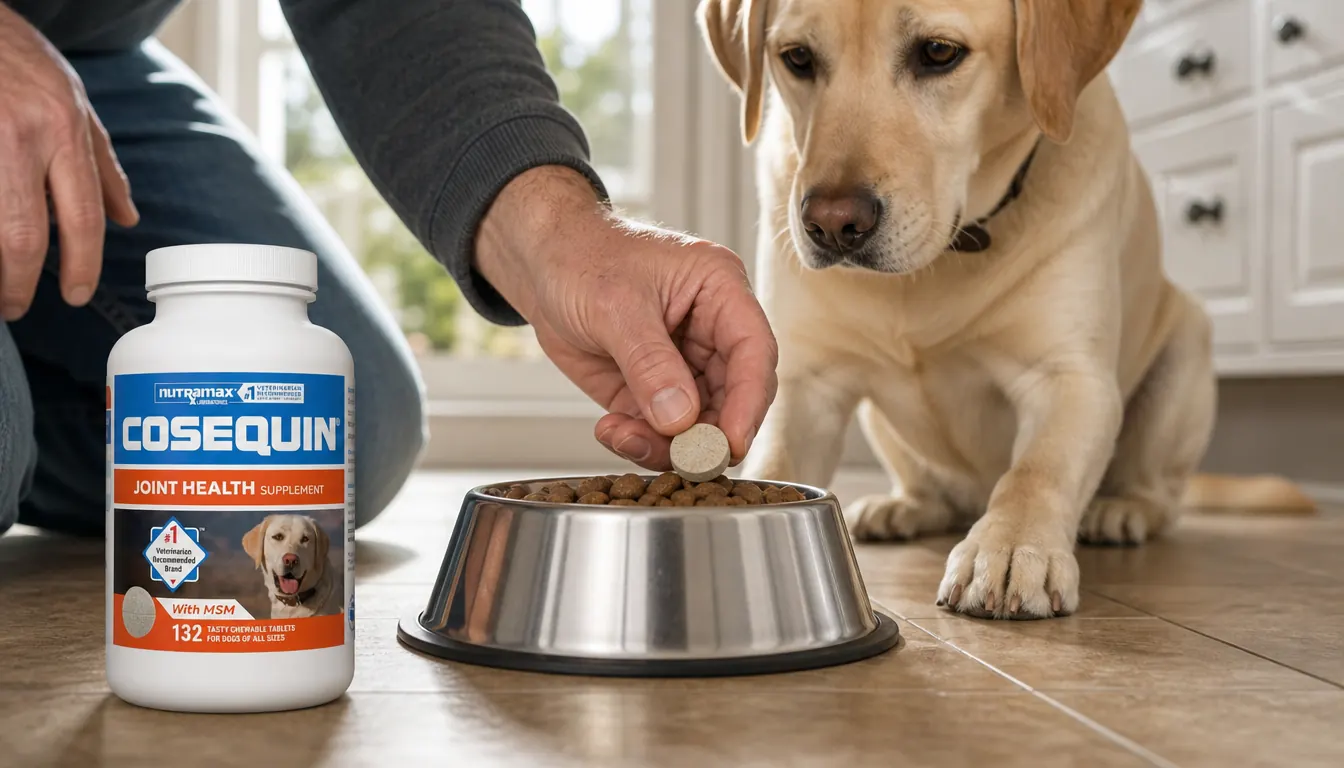
Cosequin chewable tablets come 132 to a bottle, and the chew count on the label is what determines how far that goes at your dog's weight. Read the label and today's price before you pick a size, not after.
Amazon Check Today's Price on Amazon →Step 1: Get an Actual Diagnosis Before You Buy Anything
This is the step people skip, and it is the one that decides whether any supplement is money well spent. Stiffness in the back hips can be ordinary arthritis. It can also be a cruciate issue, a disk problem, or simply a dog carrying two extra pounds he does not need. Those are different problems with different plans. I watched a lot of people spend four months and a fair amount of money on the wrong bottle because nobody had put a hand on the dog.
So book the exam. Ask specifically about the hips and the lower back. Ask whether the dog is compensating somewhere in front because of it. Ask what the target weight is. Write the answers down in the car before you drive home, because you will not remember them by dinner. Our vet gave me two things for Biscuit: a number on the scale, and a sentence I still use. Keep him lean and keep him moving, and treat the rest as support.
Then, and only then, bring up supplements. If your dog is on any medication at all, say so out loud. Glucosamine and chondroitin are generally well tolerated, but that is exactly the sort of question your vet should answer for your dog rather than for dogs in general. I am not a veterinarian and this is not medical advice. It is a retired front desk manager telling you what order to do things in.
Step 2: Match the Label's Chew Count to Your Dog's Weight
The Cosequin chewable tablets from Nutramax Laboratories are chewable tablets, which sounds obvious until you meet a dog who spits them out. Biscuit takes one dry from my hand like it is a treat. My neighbor's terrier will not. If yours is suspicious, crumble the tablet over the top of the food and stir it in. Do not microwave it, and do not introduce it inside a whole new meal on day one, because if he refuses the bowl you have wasted a chew and learned nothing.
The bottle gives a chew count by weight range. Start there. If your vet gives you a number, the vet's number wins, because she is looking at your dog and the bottle is looking at a range. The listing describes the tablet form and a 132 count, so the arithmetic of how long a bottle lasts comes straight off your dog's weight and the label. Do that arithmetic before you order rather than after, so you are not surprised when a bottle empties in a month.
One more thing about the label, and this is the part I would underline twice. Read the ingredient panel for what is actually in the product: glucosamine hydrochloride, sodium chondroitin sulfate, and MSM. If a bottle on the shelf will not tell you what is in it, put it back. That is the whole test, and it filters out most of the nonsense in the joint aisle.
Step 3: Introduce It Slowly, Over About Two Weeks
Biscuit has a sensitive stomach whenever his food changes, so I treat a new supplement the way I treat a new food: small, slow, and one thing at a time. Start below the label amount for the first few days and split whatever you give across two meals rather than landing it all in one. If the stool stays normal and he is eating with his usual enthusiasm, move up to the full amount. If it loosens, hold where you are for a few more days before you try again.
Splitting the daily amount between breakfast and dinner is the single most useful habit I picked up from the technicians at the clinic. It is gentler on the stomach, and it makes the routine stick because it is attached to something you already do twice a day. Supplements that live on the counter get given. Supplements that live in a cupboard get forgotten by Thursday.
Write the start date on the bottle with a marker. You will want that date in eight weeks and you will not remember it, no matter how certain you feel right now. I use a strip of masking tape and a Sharpie, which is low tech and has never once let me down.
Step 4: Change One Thing at a Time and Write It Down
The reason so many people cannot tell you whether a joint supplement worked is that they changed four things in the same month. New supplement, new food, new bed, new exercise. Then the dog improved and nobody knows why, or the dog got worse and nobody knows why either. One change at a time is slower, and it is the only way to learn anything.
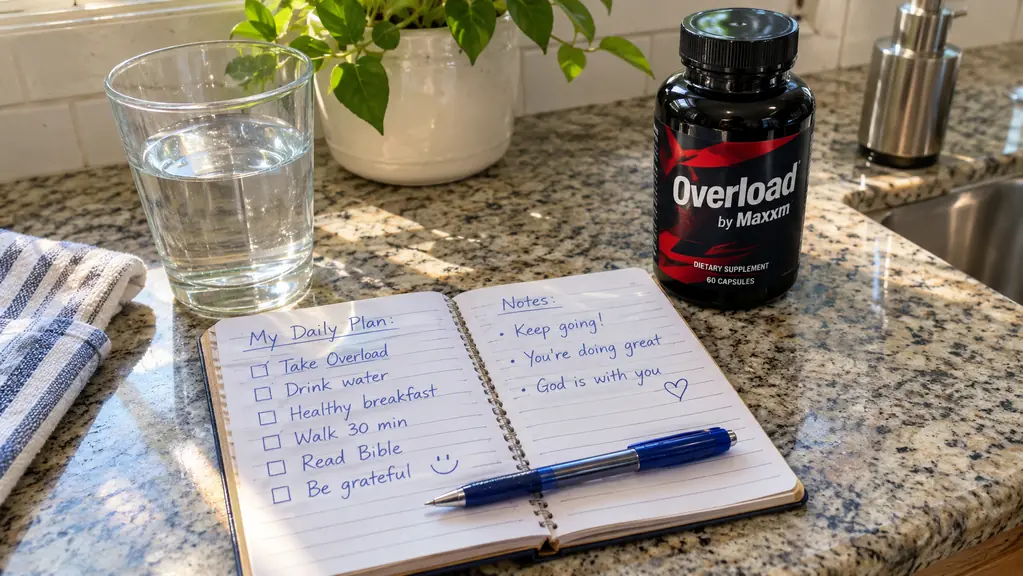
My notebook has four columns and takes ten seconds a night. How he got up in the morning. Whether he finished the walk or asked to turn around. Whether he took the porch step without the pause. Anything unusual, including a bad night or a skipped meal. Ten seconds a night for eight weeks gives you a real record, and a real record is worth more than your memory of how he seemed back in March.
Once a week, film him doing the same thing. Getting up from the same bed. Walking to the same doorway. Going up the same step. Same angle, same time of day if you can manage it. Video is unkind to wishful thinking, and it is the only reason I can tell you honestly that something changed instead of telling you it felt like something changed.
Step 5: Give It Eight to Twelve Weeks, Then Have the Honest Conversation
Joint supplements are not fast. The people who gave up at three weeks were usually not wrong about their dog. They were wrong about the timeline. Eight to twelve weeks of daily, consistent use is a fair trial. Giving it four days out of seven is not a trial, it is a hobby.
At the end of it, sit down with the notebook and the videos and answer one question. Is this dog better, the same, or worse than the day you started? Better is worth continuing. The same is a judgment call, and I would talk to the vet before I kept spending. Worse means stop and go back in, because worse is information too.
Be honest about what better means. Biscuit did not start leaping onto the couch, and I would have been suspicious of any product that made me claim he did. What changed was smaller and far more useful. He stopped pausing halfway through standing up. He started choosing the longer route around the kitchen again. That is the size of improvement a joint supplement can plausibly produce in an eleven-year-old dog.
Eight weeks in, the change was small enough that I would have missed it without the notebook. He still takes the first step slowly. He no longer stops halfway.
What Else Helps
The supplement is the smallest part of the plan, honestly. Weight is the biggest. Every extra pound on a twenty-eight pound dog is a real load across two back hips, and getting a dog down to a healthy weight is the most effective thing most owners can do for arthritis, with no bottle involved. Ask the vet for a target weight, feed to it, and weigh the dog on the same scale once a month. None of that comes from a bottle, and no bottle from Nutramax Laboratories or anyone else replaces it.
Then look at the house. Slick laminate and hardwood are hard on a stiff dog, so put a runner down the hallway and a mat at the bottom of the stairs. A ramp to the car saved my back as much as his hips. Keep the nails short, because long nails change how the foot lands. Keep walks short and frequent rather than one long one, and keep them going, because the muscle around a joint is what supports the joint. A dog that stops moving gets stiffer, and then it stops moving for good.
If your vet has prescribed a pain medication or an anti-inflammatory, that is a different tool for a different job and it is not in competition with a supplement. Do not stop a prescribed medication because the chews seem to be helping. Ask before you change anything that came with a prescription label. And if you want to see how this bottle compares with the other common glucosamine chew, there is a side by side comparison on this site, along with a longer note on what months of daily use actually looked like.
When to Stop and Call Your Vet Instead
Some things are not a supplement question. Call if the dog yelps when you pick him up, if a back leg drags or knuckles over, if he suddenly will not bear weight, if he stops eating, or if he cannot get himself up at all. Sudden inability to walk is an emergency, not a wait and see. So is a hot swollen joint, a fever, or a dog who cannot settle at night.
Call sooner rather than later if he is on any medication, if he has kidney or liver issues, or if he has surgery coming up, because timing matters with a supplement the same way it does with a drug. And if you start Cosequin, slow the introduction down as described above, and the stomach still goes off and stays off after a week, stop and call. Your vet knows your dog. I know what the waiting room looks like on a Monday, which is a different kind of knowledge.
The Boring Version Is the One That Works
One bottle, one chew count, one notebook, eight weeks. That is the entire plan, and it beats every clever thing I have seen tried in a clinic parking lot. If your vet has cleared it, start with the label and today's price.
Amazon Check Today's Price on Amazon →